
Primary Care
Primary care teams across our region are working hard to make sure people can get the help they need throughout winter. GP practices, nurses, pharmacists and wider teams are offering appointments, online access and same day support where it is clinically appropriate. Their focus is on helping people stay well, managing long term conditions and ensuring urgent issues are dealt with safely and quickly.
You can explore examples and case studies showing how primary care is supporting people across the North East and Yorkshire.
With thanks to all our primary care colleagues in the North East and Yorkshire region who joined Dr Faisel Baig to tell the story of how primary care teams are preparing for winter:
Dr Cath Monaghan, respiratory consultant and Medical Director of the North East and North Cumbria Integrated Care Board, Dr Farrukh Javid, GP and Clinical lead, Calderdale Cares Partnership, West Yorkshire, Dr Tano Rebora, GP Partner, Conisbrough Group Practice, South Yorkshire, Angela Ronan, lead practice nurse Firth Park Medical Centre, Sheffield South Yorkshire, Pete Horrocks, pharmacist, Wolsingham Pharmacy, County Durham, Dr Emma Olandj, GP and Frailty lead, York, Andy Hobson Deputy Director of Dental Commissioning, NHS England, North East and Yorkshire, Tom Robson, Urgent Dental Care Access Centre dentist and Dental Clinical Lead, NHS North East and North Cumbria Integrated Care Board.
▼ Using Point of Care Testing to manage the winter surge in respiratory illnesses.
In Calderdale, primary care teams are using new generation dual point-of-care testing (POCT) across all five primary care networks’ hubs to distinguish viral vs bacterial respiratory illnesses in patients. This improves clinical confidence, diagnosis and reduces antibiotic use in the community and avoids unnecessary hospital attendance or admissions. Read more here.
▼ Transforming Access: How Modality AWC Uses Online Systems to Deliver Modern General Practice
Modality AWC, an 11-site GP practice group in West Yorkshire serving around 90,000 patients, has been implementing online consultation systems as part of their adoption of Modern General Practice. Their journey offers valuable insights into how digital tools can improve access, enhance equity, and support staff wellbeing.

Online consultations allow patients to submit clinical requests digitally, providing details about symptoms and concerns. These requests are then triaged by clinicians, ensuring that care is allocated based on need rather than who gets through first.
Dr Pippa Richardson, GP Partner and Clinical Development Lead at Modality AWC, explains:
“For us, it’s been about improving access and having a variety of options for patients while ensuring equity. We run all enquiries -online, phone, and in-person -through the same system so patients are treated fairly, and we avoid the old ‘first come, first served’ model.”
Positive impacts on staff and workflow
One of the biggest benefits has been reducing pressure on reception teams. Previously, receptionists acted as care navigators, making decisions about appointments. Now, clinical triage is handled by the doctor assigned to be on duty that day.
Bill Graham, Community and Innovation Lead, shares:
“We’ve run our digital front door for two and a half years. Reception staff no longer make triage decisions – those are handled by clinicians. This has taken huge pressure off the team and improved morale. The job is simply better now.”
This shift has also enabled better workforce planning. With over 50,000 online requests per month, Modality AWC uses data to predict demand and allocate resources effectively.
Building confidence in new systems
Introducing online systems is a major change for both staff and patients. Pippa highlights the importance of preparation in ensuring clinical safety.
“We invested in staff training and clear workflows. We set up significant event reviews to monitor issues and made response times very clear to patients. Early on, we even sent text updates to anyone not getting a same-day response to keep them informed.”
Bill adds that practices should expect a learning curve:
“When we launched, we hit the ‘trough of doom’ – that painful phase where everything feels hard. But by refining workflows and involving staff and patients, we came through it. Today, we’d never go back to the old system.”
Benefits for patients
Patients now experience faster responses and more appropriate care. Instead of multiple phone calls for a simple issue, they can submit a request online and receive advice or an appointment quickly.
Patients who are not allocated an appointment the same day are sent a text message to make them aware of the progress of their enquiry. This is something the practice set up early on as they felt it really important to keep patients in the loop with regards to what is happening with their enquiry.
This approach has paid off. As Bill notes:
“Two and a half years in, most patients are happy using the system. Even those who were initially resistant now appreciate quicker responses and fewer phone queues.”
Key tips from Modality AWC for GP practices.
- Equity matters: Treat all access routes the same to avoid disadvantaging patients.
- Clinical triage improves safety: Patients feel reassured when a clinician reviews their request.
- Improved data helps with planning: Online systems provide insights into your practice’s demand patterns.
- Expect challenges: Change is hard, but persistence will pay off in the longer term
- Engage patients early: Use testing groups, social media, and Patient Participation Groups to refine communication with your patients.
Bill sums up the advice to fellow practices with emphasis:
“I’m 800% sure that making this switch will not be a bad decision.”
For Modality AWC, online consultations have transformed access, improved staff morale, and created a fairer system for patients. Their journey shows that while change takes effort, the rewards are significant for both patients and practice staff.
▼ How Community Pharmacy is helping patients to access care this winter
As winter pressures mount across the NHS, community pharmacies are stepping up to play a vital role in improving patient access to care. With the expansion of services such as Pharmacy First, the Pharmacy Contraception Service, and hypertension case finding, pharmacies are now more than ever positioned as the first point of contact for many patients. These developments are not only easing the strain on GP practices but also offering patients faster, more convenient care.
Pharmacy First: A trusted route for minor illness
Two years on from its launch, Pharmacy First has become embedded in daily practice. Initially seen as a bolt-on service, it is now a core part of community pharmacy. Patients increasingly trust pharmacists to manage common conditions, and many now self-refer rather than waiting for a GP appointment. This confidence has grown through positive experiences and word-of-mouth recommendations.
“The trust and the confidence that a patient will be dealt with, and they can get their conditions dealt with in the community pharmacy has definitely increased. We’re seeing patients are now not only being referred by GPs, but coming themselves because they’ve had a previous positive experience”
Taffazal Haque, Superintendent Pharmacist, Taffs Pharmacy. North Lincolnshire
GPs are also seeing the benefits. As Dr Phil Xiu explains, Pharmacy First is about ensuring “the right patient sees the right clinician the first time” and by treating seven common conditions in pharmacies, many GP surgeries have found that time can be freed up for the treatment of more complex cases. With many pharmacies open evenings and weekends, patients gain access when GP surgeries are closed – a crucial advantage during winter.
“We’ve seen a noticeable reduction in the number of requests for appointments, for example, the seven common conditions that’s covered under Pharmacy First and I think that’s mainly because they can go a pharmacy, they can have a clinical consultation and they can get the appropriate treatment if it is needed – it’s faster for the patients and it does free up capacity for us as well.”
Dr Phil Xiu, Lead DPP (Designated Prescribing Practitioner) and GP, Alwoodley Medical Centre, West Yorkshire
Contraception and Emergency Care: Expanding Access
The recent addition of emergency contraception to NHS pharmacy services has been a game-changer for accessibility. Patients could already start as well as continue their oral contraceptive supply within community pharmacy but from this Autumn, women can now walk into their local pharmacy for the emergency contraceptive pill and advice without needing a GP appointment. For younger populations, particularly students, this service has been invaluable. Pharmacists are also using these consultations to educate patients on long-term hormonal contraception options, helping prevent future crises and supporting public health goals.
“Women can also visit their local pharmacist as a first port of call to access free contraception service advice, support and medication without the need for a GP appointment.”
Elissa Ghamaroui Boots, Newcastle City Centre
This expansion has reduced inequalities in access. Previously, emergency contraceptive pill availability varied by location; now, a national service ensures consistency. Pharmacy teams are also working closely with GP practices to share data, improving continuity of care and enabling follow-up consultations where needed.
Prevention at the heart
Pharmacies are increasingly involved in preventative health, with hypertension case finding proving particularly impactful. Blood pressure checks in pharmacies often identify patients who have not seen a healthcare professional recently. Detecting high blood pressure early can prevent serious complications, and pharmacies can offer ambulatory monitoring to prepare patients for diagnosis in general practice.
As Fiona Burns notes in our latest Transforming Primary Care podcast, “Blood pressure is that golden gate to a person’s health.” By leveraging the frequent contact patients have with pharmacies – even for minor queries – pharmacists can spot issues before they escalate. This aligns perfectly with the NHS’s focus on prevention and population health.
Collaboration: the key to success
Underlying these service expansions is a growing culture of collaboration. Pharmacists, GPs, nurses, and pharmacy technicians are working together to create integrated care models. The Independent Prescribing Pathfinder Programme has also demonstrated how pharmacists can safely manage more complex conditions when supported by structured supervision and digital access to patient records.
Transforming the profession
Although some challenges still remain, with shared platforms and interoperable systems critical to future success, this expansion of pharmacy services is not only improving patient access but also transforming the profession. Pharmacists are moving beyond traditional dispensing roles into clinical care, which is boosting job satisfaction and retention. As more pharmacists qualify as independent prescribers, opportunities to manage conditions like cardiovascular disease and lipid disorders are likely to grow even further.
For patients, the benefits are clear: faster access, extended hours, and care delivered in familiar, local settings, with trusted health care advice being delivered by pharmacists and the wider multi-disciplinary primary care team as well as GPs. For the NHS, these developments free up capacity within the wider healthcare system, supporting the shift from hospital to community care outlined in the 10-year plan.
“We’re one big family of healthcare professionals that are there to really support the patient.
“It’s not all about medicines. It’s about actually recognising the normal processes of being ill and it gives the patient confidence knowing they can access that health advice from different places.”
Anna Young, NMP/IP development lead for Primary Care and Advanced Practice Nurse in South Yorkshire
This winter, as demand surges, community pharmacies are proving they are more than medicine suppliers – they are essential partners in primary care. By continuing to invest in services, digital infrastructure, and collaborative models, pharmacies are playing a valuable role in ensuring patients receive timely, high-quality care when they need it most.
▼ Making more urgent dental care appointments available this winter
Access to timely dental care has long been a challenge for many communities, particularly during the winter months when demand often rises. In Hull and East Yorkshire, a dental practice group has been expanding urgent care provision across its sites, and the impact has already been significant.
Offering urgent dental care to patients
Urgent dental care appointments are now being offered by City Health Dental across the Hull and East Riding area, including its Hull, Driffield, Bridlington and Withernsea sites. 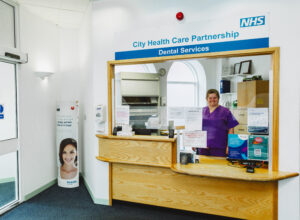
This includes the provision of 14 urgent care appointments each Saturday across their Hull city centre and Driffield practices for patients who have been unable to access dental treatment elsewhere. Alongside these scheduled slots, the practice also accommodates walk-in patients, ensuring that those experiencing sudden pain or infection can be seen quickly.
The demand has been overwhelming: every Saturday clinic has been fully booked since the service began. This demonstrates the need for the service and the importance of expanding capacity at a time when NHS dental access is identified as a priority area.
One patient, reflecting on their experience, said: “I had been struggling with toothache for weeks and couldn’t get an appointment anywhere. Being able to walk in on a Saturday and get treated was a huge relief.” Another added: “It makes such a difference knowing there’s somewhere you can go if you’re in pain. I don’t know what I would have done otherwise.”
Supporting patients through foundation dentists
A key part of this initiative which began in November 2024, has been the involvement of foundation dentists – newly qualified practitioners who are gaining experience while supporting urgent care delivery. Their contribution has allowed City Health Dental to plan for an even greater expansion: over the next three months, the team aims to see 24 patients each week through urgent care slots. This not only provides immediate relief for those in pain but also helps build the skills and confidence of the next generation of dental professionals.
Abbas El Debek, one of the dentists supporting the Saturday clinics at the Jameson Street, Hull city centre practice, explained: “We know how distressing dental pain can be, and untreated it can lead to further complications and even hospital attendance. By opening up urgent care slots at the weekend, we’re making sure people can get the treatment they need quickly. It’s incredibly rewarding to see the difference this service is making – not just in reducing waiting lists, but in giving patients peace of mind.”
For patients, the presence of enthusiastic new dentists has been reassuring. One parent commented: “The dentist who treated my son was brilliant- kind, patient, and thorough. It’s great to see younger dentists getting involved and making a difference.”
Improving access
 The impact of these changes has already been felt across the partnership’s practices across the Hull and East Yorkshire area. Most notably, there are currently no children on waiting lists to see a dentist – a real achievement given the picture of limited availability elsewhere. Families who previously faced months of uncertainty are now able to access care promptly, preventing minor issues from escalating into more serious problems.
In addition, waiting times at City Health Dental’s Withernsea practice have been significantly reduced. Patients who once faced lengthy delays are now being seen more quickly, improving both oral health outcomes and overall patient satisfaction. As one patient put it: “I used to dread calling the dentist because I knew I’d be waiting ages. Now, I feel like I can actually get help when I need it.”
Meeting winter demand
Winter often brings additional pressures to healthcare services, and dental care is no exception. Cold weather can exacerbate dental pain, while seasonal illnesses sometimes mask or worsen oral health problems. By expanding urgent care provision during this period, dentists in the region are helping to ensure that patients are not left suffering in silence.
The Saturday clinics at Hull and Driffield have also proven particularly valuable for those who struggle to attend appointments during the week due to work or school commitments. Offering weekend access means that more people can receive treatment without having to take time off or disrupt their routines. One patient explained: “I work full-time and it’s almost impossible to get to the dentist during the week. Having Saturday appointments meant I could finally get my tooth sorted without missing work.”

Looking ahead
As the winter months continue, the practice remains committed to maintaining and expanding this service helping meeting the government’s commitment of offering an additional 700k urgent dental appointments this year.
The success of this initiative highlights the importance of flexible, patient-focused approaches to dental care. By listening to community needs and adapting services accordingly, City Health Dental has demonstrated how targeted improvements can make a real difference. The combination of scheduled urgent appointments, walk-in availability, and the support of foundation dentists has created a model that shows that even modest increases in urgent care capacity can have a real impact on patient experience.
As one grateful patient summed it up: “I never thought I’d be able to get seen so quickly. It feels like the system is finally working for us.”
Community pharmacy services film cast list:
Pete Horrocks, pharmacist, Wolsingham Pharmacy, County Durham, Fiona Burns, Lead Independent Prescriber at Pharmacy Plus Health. Alwoodley, West Yorkshire, Julie Griggs, pharmacist, Wicker Pharmacy, Sheffield, South Yorkshire, Paida Gunduza, pharmacist, Widdrington Pharmacy, Widdrington, Northumberland.