
Supporting Families Living with Dementia
Admiral Nurse Louise Bates from Rotherham Central North PCN shares her experience supporting people with dementia and their carers across the town, highlighting the importance of holistic care, therapeutic relationships, and tailored support. She is just one of a number of dementia specialist Admiral Nurses made possible by Additional Roles Reimbursement Scheme (ARRS) funding with the additional support of Dementia UK.
Working across Rotherham
As the Admiral Nurse for Rotherham Central North Primary Care Network, I support five GP surgeries covering the entire Rotherham district. My caseload includes people living with dementia and their carers, many of whom are listed on the dementia registers across our practices.
I usually visit people in their own homes, which I find offers a more accurate picture of their lived experience and helps them feel more at ease. I also accept referrals from primary care colleagues, secondary care, social services, charities, and directly from families themselves.
Creating safe spaces and building networks
We run Admiral Nurse drop-in sessions where people can connect, share concerns, and access support. These sessions often include guest speakers from other services to raise awareness of additional resources available locally.
My background in palliative care drew me to Admiral Nursing because of its emphasis on holistic, gold-standard care. I believe physical, mental, spiritual, and social health are equally important in dementia support.
Supporting carers as well as patients
Carers often neglect their own health due to time constraints or guilt. I remind them that caring for themselves is essential to being able to care for their loved ones. My role includes supporting carers’ wellbeing, reducing GP contact, and signposting to services such as social prescribers, day centres, and dementia charities.
Relieving pressure on primary care
I assist with six-monthly and annual dementia reviews, working closely with colleagues in the wider multi-disciplinary team such as paramedics, therapists and external phlebotomists. This helps to ease pressure on GP appointment schedules. I also advocate for longer appointments for people with dementia, allowing time for meaningful conversations.
Common feedback I receive about my extended visits I provide is that it allows both the person with dementia and their loved one to fully express what is on their mind and time to process possible outcomes. Even if the individual has no communication struggles and the visit is brief, the knowledge that they could raise other concerns or have a general supportive chat means a lot to people who potentially may have more questions to explore. During reviews of the service a carer likened my support to a ‘lifeline in the dark and potentially lonely world of dementia and caring.’
Supporting people living with dementia
One couple I support, Jim and June (names changed), show the significant impact of tailored dementia care. Jim has vascular dementia and was experiencing increased aggression and frustration. Through home visits, we identified sensory overload as a trigger-linked to ongoing home renovations-and developed strategies to help Jim express his needs.
Later, Jim’s behaviour changed again, often preceding infections. Blood tests revealed a raised PSA and led to a prostate cancer diagnosis. I supported Jim and June through hospital visits and coordinated care with the GP surgery.
Jim’s mobility declined, and he was bed-bound, leading to low mood and repeated infections. I trained care staff, identified a Deep Vein Thrombosis (DVT), and helped complete a Respect form to avoid unnecessary hospital admissions. With physiotherapy, occupational therapy, and equipment support, Jim is now hoisted into a wheelchair daily and enjoys time in his garden again.
June, who had neglected her own health, now has support from a ‘befriender’ within the community which allows her to look after her own medical needs. Together, they are settling into a new routine, and we’re working toward the goal of getting Jim out of the house for social activities.
Supporting families like Jim and June is at the heart of Admiral Nursing. Living in a world with dementia can be a scary place filled with uncertainty. Additional time and space to process information is vital and having the ability to build therapeutic relationships with an allocated person is essential to optimising that person’s equal access to healthcare.
Information on Admiral Nurses
Admiral Nurses help people affected by dementia have the best life possible for as long as possible. They are there when people need them the most, providing health advice, offering compassionate emotional and psychological support, and helping families plan for the future. They are just one of the roles in the wider multi-disciplinary primary care team made possible by the Additional Roles Reimbursement Scheme (ARRS)
Admiral Nurses are continually supported and developed by Dementia UK. There are more than 480 Admiral Nurses who work on Dementia UK’s free Helpline, in face-to-face and virtual clinics, in the community, in GP practices, hospitals and care homes.
For more information about ARRS visit: https://www.england.nhs.uk/publication/network-contract-directed-enhanced-service-additional-roles-reimbursement-scheme-guidance/
For more information about Admiral Nursing, please contact businessdevelopment@dementiauk.org
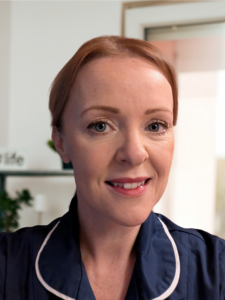
Louise Bates, Admiral Nurse