
Sickness to prevention
The NHS 10 Year Health Plan marks a major shift in focus — from treating illness to helping people stay healthy. Communities in the North West of England often experience some of the widest health inequalities, and there are pockets of deprivation across our region which can often shape health outcomes. The NHS 10 Year Plan aims to restore the means to lead a healthy life, in places where it has become most difficult, by encouraging our communities to maintain their health and prevent sickness before it starts or progresses, including supporting people to make healthy choices which can prevent ill health further down to the line and extending screening programmes which can lead to early detection and intervention.
Explore how services across the North West are already delivering the shift to prevention
Across Cheshire and Merseyside, the Building Attachment and Bonds Service (BABS) has demonstrated what neighbourhood health and care integration looks like.
BABS has invested in growing services grassroots up alongside families, partners, and leaders with shared goals and accountability to deliver integrated services that make a ‘real’ difference to the most vulnerable parents and babies.
The service is delivered by Mersey Care NHS Foundation Trust and is co-located within the Family Hubs across Halton, Knowsley, Sefton, St Helens and Warrington.
In areas of deprivation, lower life expectancy, high unemployment and poor mental health, parents with the highest inequalities and adverse childhood experiences (ACES) need easy-to-engage, non-judgemental, therapeutic services like BABS to help them build bonds, break cycles and separate out their issues from their baby, which can otherwise pose a risk.
The best place for babies is at home with parents who love them and care for them. The number of babies removed from parents’ care at birth has doubled over the last 10 years. Preventing just one baby from entering care offsets the annual cost of one of the BABS services in the region.
Learn more: Building Attachment and Bonds Service (BABS)
Mersey Care NHS Foundation Trust has launched interactive workbooks to help young people, parents, and education staff improve mental health and wellbeing. Adapted from Lincolnshire Partnership NHS resources, these workbooks provide practical tools to understand and manage issues like anxiety and low mood.
The workbooks include activities to build self-esteem, track moods, and reflect on emotions. They also offer guidance on recognizing mental health symptoms and accessing crisis support, suicide prevention, and helpful resources.
Tested in schools across Halton, Knowsley, St Helens, and Warrington, the workbooks are now available for free download. Schools can use them independently or alongside staff and family support to encourage young people to take positive steps toward their mental health.
Download the workbooks on the Mersey Care NHS Foundation Trust website and support your school community today.
Find out more: merseycare.nhs.uk/digital-workbooks
Greater Manchester’s Smokefree Pregnancy Programme has been recognised nationally for its success in reducing smoking rates during pregnancy and improving outcomes for families.
Since 2018, the programme has cut smoking at the time of delivery by over 40%, resulting in more than 6,000 additional smokefree births. Delivered in partnership by NHS Greater Manchester, local authorities, NHS trusts, and Accenture, it offers free, tailored stop-smoking support to pregnant women, birthing people and their partners.
Support includes one-to-one advice, nicotine replacement therapy, carbon monoxide monitoring, and a financial incentive scheme to encourage quitting.
The programme has drawn praise from national health leaders and is now helping shape a new national incentive scheme to support pregnant smokers across England.
Greater Manchester continues to work towards a future where every pregnancy is smokefree, and every baby has a healthier start in life.
Learn more: gmintegratedcare.org.uk/health-news/praise-for-gm-smokefree-pregnancy-programme/
Lucky 13 Barbershop in Lytham St Annes joined a national NHS initiative to reduce heart attacks by offering free blood pressure checks to clients. Launched in April 2024 and funded by the Blue Skies charity, the pilot aimed to reach men — who are less likely to visit their GP — by providing health checks in a familiar setting.
Over seven months, 182 people were tested (158 men), with 31 referred to urgent care and seven advised to see their GP due to irregular pulse readings. Barbers were trained to carry out checks, explain the results, and share advice on healthy living.
Although the formal project ended in October 2024, Lucky 13 continues to offer blood pressure checks, helping raise awareness of undiagnosed hypertension—a major risk factor for heart attacks and strokes.
This simple, community-based approach has proved effective in reaching at-risk individuals and encouraging early intervention.
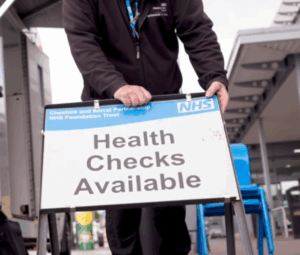
Operated by the Cheshire and Wirral Partnership NHS Foundation Trust, the Living Well Bus delivers key NHS services directly to communities across Cheshire and Merseyside. By visiting local neighbourhoods, it removes barriers like travel and time, making routine healthcare easier to access.
Services offered by the Living Well Bus include, Childhood immunisations, cervical screening for eligible residents, especially those overdue or who missed appointments and health checks and wellbeing advice
Residents can find the bus schedule on the Cheshire and Wirral Partnership NHS Foundation Trust website. Local councils like Sefton and Knowsley, as well as GP practices such as Eastham Group Practice, also share visit details to keep communities informed.
The Living Well Bus brings vital health services closer to home, supporting better health outcomes across the region.
The Living Well Service :: Cheshire and Wirral Partnership NHS Foundation Trust
Opt-Out Blood Borne Virus Testing Launched at Royal Bolton Hospital
Royal Bolton Hospital’s Emergency Department has introduced opt-out blood borne virus (BBV) testing, as part of a Greater Manchester-wide initiative to improve early diagnosis of HIV, Hepatitis B (HBV) and Hepatitis C (HCV).
From March 2025, all patients aged 16 and over receiving a routine blood test in the emergency department will also be tested for BBVs, unless they choose to opt out.
The programme is designed to normalise testing, reduce stigma, and ensure people who may not access other testing routes receive the support and treatment they need. HIV and viral hepatitis often show no symptoms for years, increasing the risk of serious complications and transmission if left untreated. Early diagnosis can be life-saving and helps prevent onward transmission.
Since launching in Greater Manchester in 2021, the programme has tested over 300,000 people, diagnosing more than 580 individuals with HIV, HCV or HBV who were previously unaware of their status.
Royal Bolton’s participation supports the region’s goal to eliminate new transmissions of HIV and viral hepatitis by 2030, while addressing health inequalities and improving long-term outcomes.
Reaching the Unreached in Lancaster’s Rylands Estate
Lancaster’s Rylands estate is one of the most deprived areas in the region, with many residents facing long-term unemployment, poor mental health, addiction, and limited access to healthcare.
In early 2024, Lancaster Primary Care Network launched an enhanced outreach programme to tackle health inequalities and improve engagement. Led by an outreach practitioner and nurse associate, the team focused on people who hadn’t accessed GP services in over five years, including non-engaging diabetics.
The team offered home visits and NHS health checks, providing personalised support and building trust with individuals often overlooked by traditional services.
More than 250 health checks were offered, with around 150 people engaging with the service. The team identified undiagnosed conditions and connected residents with wider support — including food deliveries, financial help, and essential household items — through partnerships with organisations like Bay Volunteers, Green Rose, and the local resident’s association.
The programme also addressed broader community issues such as playground safety and waste services, helping create a healthier, more connected environment.
This ongoing, person-centred approach is reducing health inequalities and delivering real change for the Rylands community.