
Finding my way: how NHS Talking Therapies helped me grow
Looking back over the last few years, I can see how much has changed — and how much support has made that possible.
Life threw a lot at me all at once. Big changes at home, upheaval at work, and then the coronavirus pandemic on top of everything else. It hit my mental health hard. I stopped wanting to do the things I normally love, I didn’t want to leave the house, and at work I was battling real feelings of imposter syndrome — that nagging sense that I didn’t belong or wasn’t good enough.
I’m lucky to have colleagues, friends and family I can talk to, and that helped. But when my feelings started to feel more serious, I went to my GP and was prescribed medication for depression. I was also referred to NHS Talking Therapies, and honestly, that referral changed things for me.
Something that surprised me was how much it helped that my counsellor was a stranger. There was no history, no baggage — just space to talk. Together we worked on ways of understanding my thoughts, sitting with them rather than running from them, and finding practical strategies to manage the harder moments.
The impact went beyond just me. I’ve found myself talking more openly with the people around me about mental health — how important those conversations are, especially for young men, who haven’t always been encouraged to open up. That’s part of why I got involved with Rotherham Council’s Be the One campaign, making a film where I talk openly about my experiences. If it helps even one person reach out, it’s worth it.
Being autistic, I was glad the therapy was tailored to how I work best. We talked about how I prefer to communicate, what my sensory needs are, and how much it mattered to me to see the same therapist consistently. I had sessions over the phone, on Teams and face to face, depending on what felt right at the time. If you have a learning disability or are autistic, you can access NHS Talking Therapies and ask for the reasonable adjustments that work for you.
These days, my mental health is in a much better place. I’ve also got better at recognising the early signs when things are starting to slip — for me, it’s usually when I stop engaging with gaming or watching TV, the things I normally enjoy. When I notice that happening, I go back to my GP and lean on the strategies I learned through counselling.
Most recently, I’ve started a graphic design course, which has been a real boost. It’s helping me feel more confident and better able to adapt to change — at work and beyond.
If you’re struggling, please know that support is out there, and asking for it is one of the strongest things you can do.
More information
- If you need help and you cannot or do not want to contact a GP, call the Samaritans on 116 123 (the helpline is open 24 hours a day, 365 days a year). You can also email jo@samaritans.org
- NHS England recently published Staying safe from suicide: Best practice guidance for safety assessment, formulation and management
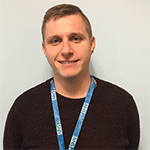
David Gill
David Gill has been a Lived Experience Adviser in the Learning Disability and Autism programme since December 2015.
During that time, he has worked in the CYP and Autism teams and his key work has included Ask Listen Do, Keyworking and the My Rights Magazine.
He is a talented artist, and his illustrations have appeared on many NHS presentations, publications, and documents.
In 2019 David was named on the Dimensions Leaders List for people who are autistic or have a learning disability.