
Helping older people access new levels of independence through the NHS App
Alex Parker, Chief Executive Officer, Age UK North Yorkshire Coast & Moors, explains how the NHS App support delivered through the charity’s digital inclusion programme is helping older people gain confidence, independence and better access to healthcare.
Digital technology is transforming how we access healthcare. From ordering repeat prescriptions to viewing test results and managing appointments, the NHS App is becoming an increasingly important gateway to NHS services.
Yet for many older people, particularly in rural and coastal communities, this digital world can still feel out of reach.
At Age UK North Yorkshire Coast & Moors, we see every day how a lack of digital skills, confidence, devices or connectivity can prevent people from accessing services that many of us now take for granted. That is why our Digital Inclusion Programme helps older people get online safely, independently and confidently.
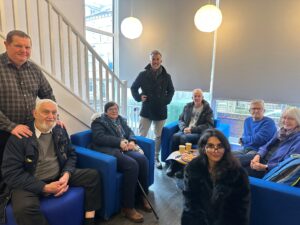
The Age UK project team, Michael Fletcher and David Skaith, Mayor of York & North Yorkshire
Over the past year, we have seen first-hand how digital inclusion not only improves access to healthcare, but has the potential to boost overall quality of life.
The digital challenge facing older people
Digital exclusion remains a significant issue for older adults. Some have never used a smartphone or tablet on their own, while others lack access to devices, connectivity or the confidence to get started.
Our programme was designed to address these barriers through personalised support, practical learning and access to technology. Digital inclusion is about much more than teaching technical skills. It is about helping people access services, stay connected and remain independent.
A year of impact
Between June 2024 and June 2025, our programme delivered significant results across North Yorkshire:
- 1,823 older people reached through awareness-raising activities.
- 245 older people registered for digital support.
- 306 digital learning sessions delivered.
- 381 older people supported with digital skills development.
- 3,110 older people made aware of the benefits of being online.
- 120 older people supported through technology loan and donation schemes.
Many of those we supported were at greatest risk of exclusion. Nearly half were living with a disability, more than 40% were on low incomes and almost 67% lived alone.
The NHS App as a gateway to confidence
One of the most powerful lessons from our work has been the role digital health tools can play in encouraging wider digital engagement.
For many older people, learning how to use the NHS App provides a practical reason to get online. Through one-to-one support, participants learned how to:
- Access health information
- Order repeat prescriptions
- Manage appointments
- View test results
- Navigate NHS digital services confidently
For people managing long-term conditions, these simple functions can make a significant difference.
One participant told us:
“Ordering my repeat prescriptions and booking appointments is so much easier now. If I forget the details, I can just look them up on the app.”
For many, using the NHS App became the first step towards wider digital confidence.
Building confidence one conversation at a time
The success of our programme has not come from technology alone. It comes from taking a patient, person-centred approach.
Many learners arrive feeling nervous about technology or convinced that it is “not for them”. Through personalised support, we help people learn at their own pace and focus on what matters most to them.
As one participant explained:
“I didn’t think technology was for me before, but now I see how a phone could help in my daily life. Learning about its features has made me excited to explore new possibilities.”
These lightbulb moments often become the catalyst for greater confidence and independence which have a knock-on impact across other aspects of their lives.
Tackling loneliness as well as digital exclusion
The benefits extend far beyond healthcare.
Digital inclusion can help tackle loneliness by enabling people to stay connected with family, access online communities and pursue hobbies and interests.
One participant who lived alone told us:
“It doesn’t feel so quiet in the evenings anymore. I put on YouTube and it feels like I have company.”
She added:
“I feel less alone knowing I can see and hear people, even if they’re not in the room with me.”
These stories remind us that digital inclusion is ultimately about human connection.
For some older people, the biggest barrier is affordability.
Removing barriers through technology loans
Our Technology Loan Scheme provided tablets and smart speakers to low-income users, alongside personalised training and support. Around 20% of low-income users were supported through the scheme, with many going on to purchase their own devices after gaining confidence and seeing the benefits first-hand.
Ensuring no-one is left behind
The NHS App has enormous potential to improve access to healthcare and help people manage their health more independently. However, its success depends on ensuring no one is left behind.
Our experience shows that digital inclusion works best when trusted relationships, personalised support and access to technology come together. It is not simply about teaching someone to use an app. It is about giving people the confidence to engage with the digital world on their own terms.
Across North Yorkshire, we have seen how digital skills can reduce loneliness, improve independence and help people stay connected to the things that matter most. The NHS App is a powerful example of this, providing a practical gateway into the wider digital world.
With continued investment, strong partnerships and a shared commitment to digital inclusion, we can help more older people benefit from digital healthcare and live healthier, more connected and independent lives. We worked closely with York and North Yorkshire Combined Authority and Community First Yorkshire on this project – the support from digital inclusion expert Michael Fletcher from the latter helped us encourage even more people to take that digital leap of faith.
Because when older people gain the confidence to use tools such as the NHS App, they gain much more than easier access to services. They gain greater control over their health, stronger connections with others and new opportunities to live well and independently. That is why ensuring no one is left behind must remain at the heart of our digital health aims and ambitions.

Alex Parker and Age UK North Yorkshire Coast & Moors chair Jenny Crowther.