
Supporting previously underserved communities in Leeds
York Street Health Practice in Leeds has developed a pioneering model of care that is transforming access to primary care for some of the city’s most vulnerable communities. Through a combination of outreach, multidisciplinary working and a deeply embedded ethos of inclusion, the practice supports people from a wide range of backgrounds, many of whom would have previously struggled to access NHS services. This approach has been recognised by the Care Quality Commission (CQC), which recently upgraded the practice from “good” to “outstanding”.
At the heart of the practice’s success is a fundamentally different way of delivering general practice. As GP lead Dr Mark Astill explains, traditional clinic-based care is only one part of a broader system: “The standard GP in clinic work is very much a part of what we do day-to-day, but it’s no more important than our integrated services.”
Instead, York Street operates as an inclusion health practice, blending in-reach, outreach and specialist services to meet patients exactly where they are, both physically and emotionally.
Reaching the most vulnerable in society
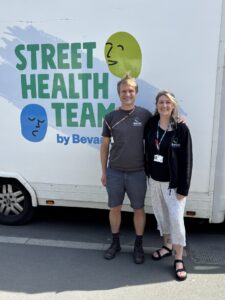
Dr Mark Astill and Abby Siuda
The practice works with groups who often face significant barriers to accessing mainstream healthcare. This includes people experiencing homelessness, refugees and asylum seekers living in temporary accommodation, sex workers, and Gypsy, Roma and Traveller communities whose mobility and literacy needs can make continuity of care challenging.
For people experiencing homelessness, York Street provides extensive outreach, including street visits, early morning engagement and close collaboration with partner organisations. Teams work alongside services such as the Homeless Health Inclusion Team (HIT) in local hospitals, ensuring that patients are supported during admission and followed up after discharge.
The practice also supports refugees and asylum seekers through a dedicated Migrant Health Team recognising the complex physical and psychological needs of this population. As Mark notes, while physical conditions may vary, “they have a huge amount of psychological morbidity which is often trauma-related, and that is very intensive work.”
For sex workers, York Street provides flexible, outreach-based care in partnership with organisations such as the Joanna Project, delivering services in environments where individuals feel safer. Abby Siuda, Practice Manager explains: “We do a lot of work taking it to them because they don’t feel safe coming into the city centre – it’s just reaching the parts of society that people tend to forget about.”
Meanwhile, support for Gypsy, Roma and Traveller communities is designed around their mobility and communication needs. Reception staff play a critical role, often spending time helping patients complete registration and identifying needs in a single encounter. Abby highlights that many patients may only attend once: “We try and get as much information as we can on that very first meeting.”
The Bevan Bus: bringing care directly to patients in the community
A standout feature of York Street’s integrated care work is the “Bevan Bus” – a mobile clinic staffed by paramedics, nurses and GPs. This vehicle enables the team to deliver care directly to people on the streets, in hostels or at community locations across Leeds.
Abby describes its impact simply: “We have a bus and we go out to the patients. So if they’re on the streets, living under bridges, we can just take the practice to them instead of them having to get down here.”
The Bevan Bus plays a vital role in addressing unmet need. For example, it delivers wound care for patients who might otherwise end up in A&E due to lack of access elsewhere. Mark highlights the importance of this approach in tackling inequality: “These are patients with significant risks, who frequently find it difficult to access care. This is the Inverse Care Law in action.”
The number of buses has gradually grown across West Yorkshire, reflecting its success in improving access and reducing pressure on hospital services.
A truly multidisciplinary approach
York Street’s success is also rooted in strong multidisciplinary working. Weekly practice-wide meetings bring together clinicians, outreach teams, administrative staff and partner services to coordinate care and share insights.
Mark emphasises the importance of integration: “Our teams don’t work in isolation, there’s a real multidisciplinary feel about it.” The extended multidisciplinary team includes nurses, mental health specialists, paramedics, occupational therapists and even an art therapist, enabling holistic support for complex needs.
The practice also works closely with community organisations, providing care in settings such as St Anne’s Resource Centre, where patients can access food, showers and healthcare in one place. This proactive approach reduces barriers and ensures earlier intervention.
Listening to patients when they need it most
A defining feature of York Street’s model is the time and attention given to each patient. Reception staff are trained to listen and support individuals with complex needs, often spending extended time with patients in crisis.
Abby explains: “A lot of our patients just want someone to listen to them. They’re so used to getting doors shut in their faces.” This trauma-informed approach builds trust and encourages engagement with services that might otherwise be avoided.
Continuity is maintained wherever possible, even for transient populations, through shared records across Bevan sites and flexible registration processes.
Measuring success differently
The outcomes achieved by York Street are not always captured by traditional metrics. Instead, success is often measured in small but meaningful improvements in patients’ lives.
Mark shares one example discussed during a multidisciplinary review: a patient with long-term homelessness and alcohol dependency who eventually died in stable accommodation. While the outcome was still a sad one, the practice team realised what a difference they were able to make: working together with other services to provide housing, stability and dignity at the end of life.
As Mark explains, “These kind of outcomes are probably the best measures of our success. Thanks to the help he was given, he passed away in his own home with a cup of tea to the side of him.”
The CQC’s ‘outstanding’ rating reflects not only clinical effectiveness, but also the practice’s ability to reach underserved populations and reduce health inequalities.
For the team, the recognition validates years of effort and innovation. Abby reflects: “We do so much for the patients each and every day – the CQC rating really made that feel recognised.”
A model for the future
York Street Health Practice demonstrates what is possible when services are designed around the needs of the most excluded. By bringing care to patients, integrating services and prioritising trust and relationships, the practice is improving outcomes for some of the most vulnerable people in society.
As health systems continue to focus on neighbourhood health and tackling inequalities, York Street provides a great example of how primary care can adapt to meet the needs of every community.